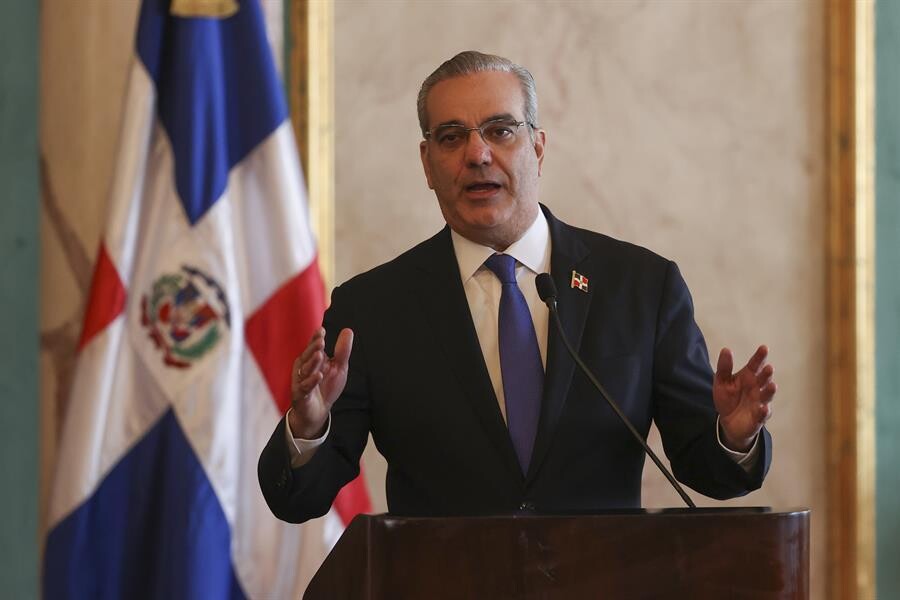
Dominican President Luis Abinader expressed today his concern regarding potential cuts in foreign aid programs by the United States, particularly about the freezing of funds that could affect initiatives aimed at food assistance in Haiti. During his weekly press conference, Abinader stated that he would address the issue with U.S. Secretary of State Marco Rubio, who is scheduled to visit the Dominican Republic on Thursday.
"There are cuts that could affect Haiti, in areas such as food assistance," Abinader stated, adding that the Dominican Republic is also not receiving the level of aid from the United States that it could provide. The president has repeatedly called upon the international community to provide assistance to Haiti, the neighboring country with which they share the Caribbean island of Hispaniola.
Abinader affirmed that his country will take appropriate measures in light of the possibility of aid cuts from the United States, considering that they will apply in justified cases. In the meeting with Rubio, other topics will also be discussed, including the situation in Haiti, the organization of the Summit of the Americas in the Dominican Republic at the end of the year, and the fight against drug trafficking, in which the United States acknowledges the country's success.
Regarding Rubio's appointment as acting director of the Agency for International Development, Abinader hopes that the participation of the United States in the Summit of the Americas will include President Donald Trump. Concerning immigration, the Dominican president made it clear that the country will not accept the arrival of undocumented immigrants from third states, arguing the right and duty to protect Dominican citizens.
In relation to the presence of Haitians in irregular migration status in the Dominican Republic, the government launched a mass deportation program last October. In the face of the deportations of undocumented individuals driven by the Trump administration, Abinader highlighted that the majority of Dominicans in the U.S. reside legally and offered support to those in irregular situations, especially in Puerto Rico. U.S. immigration authorities have conducted raids in Puerto Rico, where around 55,000 Dominicans are documented.