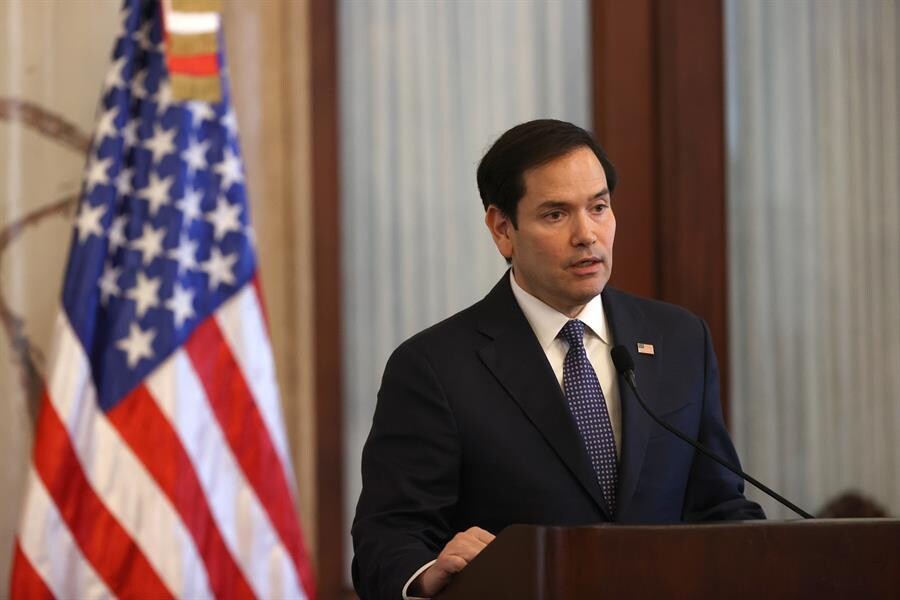
The U.S. Secretary of State, Marco Rubio, concluded his first international tour with a visit to Central America and the Dominican Republic, where he addressed key issues such as migration, the Panama Canal, and China's alleged influence in the region. This tour marks a shift in U.S. foreign policy by focusing on Latin America.
During his trip, Rubio visited Panama, El Salvador, Costa Rica, and finally, the Dominican Republic. In each country, he discussed topics of regional interest, such as the management of irregular migration. In Panama, he oversaw the deportation process of Colombian migrants intercepted in the Darién jungle. This country and the United States have agreed to deport over 1,700 people since July.
In El Salvador, Rubio was warmly received by President Nayib Bukele, who has become a close ally of the Trump Administration. Bukele agreed to take in undocumented migrants detained for serious crimes in the United States to a prison in his country, an unprecedented agreement.
In Costa Rica, Rubio praised the bilateral cooperation on cybersecurity, migration, and drug trafficking issues. He also congratulated the Costa Rican government for its firmness in limiting participation of Chinese companies in the 5G telecommunications network, allowing only trusted providers.
In Guatemala, it was agreed that the country would take in more migrants deported from the United States, while the Dominican Republic addressed the crisis in Haiti. Rubio emphasized the importance of supporting economic stability in the region.
During his tour, Rubio also criticized the regimes of Nicaragua, Venezuela, and Cuba, calling them enemies of humanity that have contributed to the migration crisis in the hemisphere. Rubio focused his attention on strengthening the relationship between the United States and Latin American countries and promoting regional cooperation on key issues such as migration and security.